Every month A Place for Film will bring you a selection of films from our group of regular bloggers. Even though these films aren’t currently being screened at the IU Cinema, this series will reflect the varied programming that can be found at the Cinema, as well as demonstrate the eclectic tastes of the bloggers. Each contributor has picked one film that they saw this month that they couldn’t wait to share with others. Keep reading to find out what discoveries these cinephiles have made, as well as some of the old friends they’ve revisited. (more…)
Fantastic Artists and Where to Find Them: Black Musicians as Auteurs in 2018

In the past, I have loosely touched on what makes an auteur an auteur. It’s a tricky title to nail down due to the subjective nature of what it means to have complete control over the vision of your art. It becomes even trickier when you try and apply the same theory to something outside of the practice of film. Like, for instance, when we apply such a label to musicians and performers who cross over into different realms of media and expression, or whose personas and reoccurring themes permeate so strongly through their body of work. Or who 20 or 30 years ago may have stepped into the realm of traditional filmmaking but are alive in a time where that prospect seems overly daunting when you have so much more control of your voice on smaller but widely available screens. During the months of April and May of 2018 I’ve been pleasantly overloaded with incredible visual and musical media from three of our best currently practicing auteurs. They all just happen to be young black musicians.
(more…)Underseen: Kiyoshi Kurosawa’s Serpent’s Path (1998)

“Underseen” is a new, ongoing series where I highlight exceptional titles that have gone unfairly overlooked or underseen.
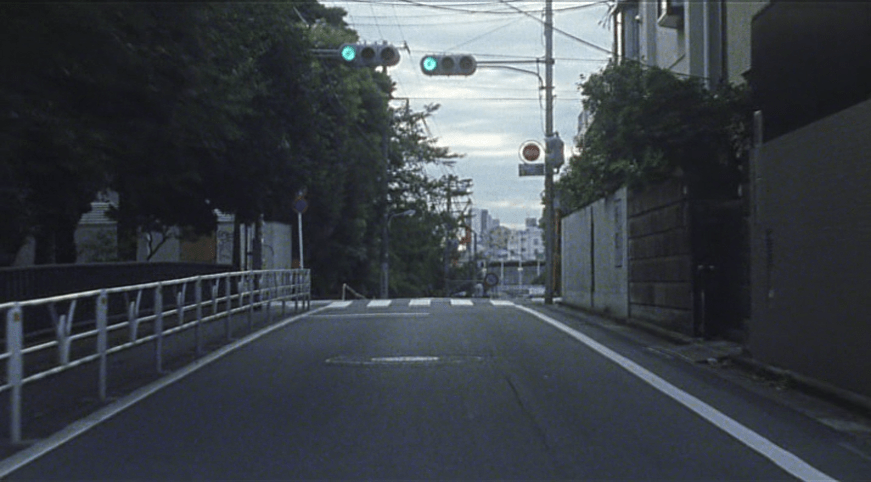
Serpent’s Path is one half of a two-part project which followed Kiyoshi Kurosawa’s international sensation, the frightening and strange horror detective story Cure (1997). Having been offered a small budget to make two films, director Kurosawa and writer Hiroshi Takahashi each hastily wrote scripts, versions of the same basic premise: a father seeks vengeance for the abduction and murder of his daughter. Takahashi, writer of Ringu (1998), penned Serpent’s Path, and Kurosawa wrote its ostensible remake, the reinterpreted and tonally very different Eyes of the Spider (1998). With the same cast and crew, and only a month for production, Kurosawa directed both films, shooting each back to back. (more…)
Sitting Through the Credits

For me, one of the most difficult things about teaching film is to convince students to not only sit through end credits, but to actually pay attention to them. Marvel seems to have found the trick to this (at least the sitting-through-the-credits part, and probably only in theaters): exploit the franchise’s extended narrative by putting some hint of forthcoming events or extraneous narrative Easter eggs at the very end, or sometimes just the middle, of the credits. What really blows my mind, however, is the reluctance I witness in many people to even sit through older films’ end credits—they last maybe a minute or two, if even that! (more…)
Godard’s Life to Live
A new movie and a special anniversary make May 2018 a fantastic time to revisit the life and work of French New Wave director Jean-Luc Godard. A biopic about Godard, Le Redoubtable, recently played at the IU Cinema. It tells the story of his political radicalization during the late 1960s. One section of the film touches on his participation in shutting down the Cannes Film Festival during the turbulent events in France during May 1968, which celebrates its 50th anniversary this year. (more…)
Moonrise Kingdom’s Cinematic Ancestors
When Wes Anderson’s Moonrise Kingdom was released in 2012, audiences and critics alike noted the film’s similarities to Pierrot le fou, a 1965 film by French New Wave director Jean-Luc Godard. However, Godard isn’t the only — or even the most important — influence on Wes Anderson. This video essay looks at a few of the cinematic influences on one of Anderson’s most beloved films. (more…)