INTRODUCTION TO SCORING
(MUS-K 455/555) Spring semesters: 3 credits. pm TR, (Franklin Hall 304c8)
This course introduces the creative and technical foundations of composing music for visual media. Designed for musicians, composers, and producers from all backgrounds, it explores how music shapes storytelling, character, and emotion in film, television, and interactive media. Students learn to compose original music that complements and enhances visual narrative through thematic development, pacing, and synchronization to picture.

Weekly assignments guide students through the essential components of the scoring process, including spotting sessions, hit point mapping, tempo synchronization, and cue structure. Projects span a variety of genres and media formats, encouraging students to apply their individual musical strengths—whether in performance, composition, sound design, or production—to the cinematic context. Undergraduate and graduate students share the same core curriculum; however, graduate students are expected to demonstrate a higher level of sophistication, analytical insight, and professional execution.
Graduate students must also submit detailed documentation of their workflow, including cue sheets, spotting notes, and descriptions of compositional and production choices aligned with industry standards. Evaluation at the graduate level emphasizes originality, narrative understanding, and command of technical tools. During in-class screenings and critiques, graduate students are expected to offer advanced commentary and lead selected discussions. Undergraduate assessment focuses on developing scoring fundamentals, timing accuracy, and creative problem-solving.
ENROLLMENT REQUIREMENTS
Open to undergraduate and graduate students from all areas of study with instructor approval. Non-degree students and those from outside the Jacobs School of Music are welcome! No prior film scoring experience is required. Familiarity with sequencing, notation software, or composition is helpful but not mandatory.
TEACHING AND LEARNING METHODS
Instruction combines lectures, guided composition exercises, film screenings, and collaborative critique sessions. Students participate in spotting workshops, thematic development exercises, and in-class cue reviews that simulate professional scoring environments. Weekly projects focus on the integration of sound and image, developing the ability to convey story and emotion through musical decisions. Graduate students are expected to lead critique sessions, contribute advanced analysis, and maintain professional-level documentation of their creative process.
LEARNING OUTCOMES AND OBJECTIVES
By the end of this course, students will be able to:
-
Compose and produce original music that supports and enhances visual storytelling.
-
Synchronize music to picture using professional DAW workflows and tempo mapping.
-
Develop thematic material that conveys character, emotion, and dramatic pacing.
-
Apply musical and production techniques to serve the needs of narrative media.
-
Communicate effectively with directors, editors, and collaborators in a professional context.
TECHNICAL RECOMMENDATIONS
Digital Audio Workstation (DAW): Logic Pro, Cubase, or Pro Tools recommended.
MIDI Keyboard & Virtual Instruments: Access to orchestral and/or hybrid sample libraries strongly encouraged; required for graduate students.
Video Playback Capability: DAW must support video synchronization for film scoring assignments.
Notation Software: Sibelius, Dorico, or Finale recommended for cue sheets and score preparation.
Recording Capability: Optional but encouraged for incorporating live performances into assignments.
This course welcomes students from diverse musical and creative backgrounds who are interested in exploring the intersection of music, image, and storytelling.
Contact Professor Roger Neil with any questions. Contact Professor Steven Thomas with questions about software and tech.
ADVANCED TECHNIQUES IN SHORT FORM SCORING
(MUS-K 455/555) Fall semesters: 3 credits. 9:45-11:00am TR, (Franklin Hall 304c8)
This course explores advanced techniques in scoring for short-form visual media, including short films, commercials, trailers, and episodic content. Students will develop skills in thematic composition, timing, orchestration, sound design, and industry-standard delivery methods. Emphasis is placed on unlocking the drama in a composer’s writing to heighten emotional impact and reinforce the narrative arc.

The core curriculum, topics, and weekly projects are the same for both undergraduate and graduate students; however, graduate students are held to a higher standard of depth, rigor, and professional execution. Graduate-level work is expected to demonstrate sophisticated orchestration techniques and the ability to create professional scores and parts for assignments and assessments. Assignments require proper preparation and delivery of organized stem mixes, ensuring compatibility with professional dubbing and mixing workflows.
Delivery requirements become progressively more intense and strictly enforced as the semester advances, mirroring professional industry expectations. Graduate students must also provide detailed documentation of their workflow and creative decisions, reflecting current industry standards, and are evaluated with greater emphasis on originality, dramatic interpretation, problem-solving, and professional presentation. Weekly projects are reviewed in studio discussions, where graduate students are expected to offer deeper analytical insights and lead portions of the critique process. Undergraduate students are assessed primarily on technical proficiency, accuracy, and application of foundational skills.
ENROLLMENT REQUIREMENTS (PREREQUISITES, CO-REQUISITES, PROGRAM RESTRICTIONS, ETC.)
Open to undergraduate and graduate students with instructor approval. Students must have basic proficiency with a Digital Audio Workstation (DAW), and prior experience with MIDI sequencing, audio mixing, notation software, and orchestration concepts is recommended. Non-degree majors must demonstrate proficiency through a portfo
lio or other project examples. Graduate and undergraduate students are enrolled together but evaluated according to level-appropriate standards.
TEACHING AND LEARNING METHODS
Instruction combines lectures and demonstrations that review the principles and elements of dramatic scoring to picture, with a focus on unlocking the drama through orchestration and thematic writing. Students complete weekly scoring-to-picture assignments, creating original MIDI mockups/realizations, preparing professional scores and parts, and delivering organized stems in alignment with industry standards. In-class playback sessions provide opportunities for critique and peer feedback, emphasizing dramatic impact, orchestration choices, and storytelling effectiveness.
Studio and lab work in JS328 Studio simulates professional workflows and dubbing stage preparation, while professional development discussions address networking, collaboration, and industry expectations. One-on-one consultations offer individualized feedback and mentorship, supporting students in refining their dramatic interpretation, orchestration, and score preparation skills.
LEARNING OUTCOMES AND OBJECTIVES
By the end of the course, students will be able to develop original thematic material from script-based prompts that heightens dramatic impact and supports the narrative arc. They will understand the complete execution process from spotting through final delivery, including the preparation of professional scores and parts. Students will apply advanced orchestration techniques to enhance emotional pacing, dramatic choices, and point-of-view scoring, and will explore the use of melody, rhythm, and harmony as storytelling tools in music for media. They will work effectively with temp tracks, cue sheets, and industry-standard post-production workflows, including the preparation and delivery of organized stems for assignments.
Throughout the semester, delivery requirements will become progressively more intense and strictly enforced, mirroring professional industry standards. Final projects will be delivered in a professional format suitable for industry applications, demonstrating clarity, originality, and strong dramatic intent.
Graduate students are held to higher standards of depth, rigor, and professional execution. In addition to the above, they will demonstrate mastery of advanced orchestration techniques to deepen emotional pacing, enhance point-of-view scoring, and create professional scores and parts for assignments and assessments. Graduate students will incorporate at least one live instrument in each assignment, prepare and deliver properly organized stems for all submissions, and maintain detailed documentation of their workflow and creative decisions in alignment with current industry standards. They will apply revisions based on feedback to refine both creative and technical execution, with delivery requirements becoming progressively more demanding. The course culminates in a final live recording session that meets broadcast-quality standards.
TECHNICAL RECOMMENDATIONS
- Digital Audio Workstation (DAW): Logic Pro, Cubase, Pro Tools, or similar.
- MIDI Keyboard & Virtual Instruments: High-quality sample libraries recommended; required for graduate students.
- Notation Software: Sibelius, Dorico, or Finale for creating professional scores and parts.
- Recording Capability: Ability to record and capture live performances for integration into assignments and projects.
For scoring MAJORS: suggested minimum personal computer and software resources.
P: Permission of instructor and demonstrated background in MIDI and composition.
Contact Professor Groupé with any questions. Contact Professor Thomas with questions about Synthestration, tech gear/sample libraries.
ADVANCED TECHNIQUES IN LONG FORM SCORING
(MUS-K 455/555) Spring semesters: 3 credits. 9:45-11:00am TR, (Franklin Hall 304c8)
This course explores advanced techniques in scoring for long-form visual media, including short films and feature-length projects. Students will develop skills in narrative arc design, continuity in thematic writing, long-term emotional pacing, orchestration, and integration of motifs across extended timelines. Emphasis is placed on sustaining dramatic tension, developing and transforming themes, and ensuring musical continuity that enhances the visual storytelling over the entire work.

The core curriculum, topics, and weekly projects are the same for both undergraduate and graduate students; however, graduate students are held to a higher standard of depth, rigor, and professional execution. Graduate-level work is expected to demonstrate sophisticated orchestration techniques and the ability to create professional scores and parts for assignments and assessments. Assignments require proper preparation and delivery of organized stem mixes, ensuring compatibility with professional dubbing and mixing workflows. Delivery requirements become progressively more intense and strictly enforced as the semester advances, mirroring professional industry expectations.
Graduate students must also provide detailed documentation of their workflow and creative decisions, reflecting current industry standards, and are evaluated with greater emphasis on originality, narrative shaping, problem-solving, and professional presentation. Weekly projects are reviewed in studio discussions, where graduate students are expected to offer deeper analytical insights and lead portions of the critique process. Undergraduate students are assessed primarily on technical proficiency, accuracy, and application of foundational skills.
ENROLLMENT REQUIREMENTS (PREREQUISITES, CO-REQUISITES, PROGRAM RESTRICTIONS, ETC.)
Successful completion of Advanced Techniques in Short Form Scoring and Synthestration 1: Modern Scoring and Production Techniques is required. Open to undergraduate and graduate students with instructor approval.
TEACHING AND LEARNING METHODS
Instruction combines lectures and demonstrations that review the principles and elements of dramatic scoring to picture, with a focus on unlocking the drama through orchestration and thematic writing. Students complete weekly scoring-to-picture assignments, creating original MIDI mockups/realizations, preparing professional scores and parts, and delivering organized stems in alignment with industry standards. In-class playback sessions provide opportunities for critique and peer feedback, emphasizing dramatic impact, orchestration choices, and storytelling effectiveness.
Studio and lab work in JS328 Studio simulates professional workflows and dubbing stage preparation, while professional development discussions address networking, collaboration, and industry expectations. One-on-one consultations offer individualized feedback and mentorship, supporting students in refining their dramatic interpretation, orchestration, and score preparation skills.
LEARNING OUTCOMES AND OBJECTIVES
By the end of the course, students will be able to develop original thematic material that sustains and enhances the dramatic arc of a complete long-form work. They will understand the execution process from spotting through final delivery, including the preparation of professional scores and parts.
Students will apply advanced orchestration techniques to maintain narrative cohesion, thematic continuity, and emotional pacing over extended timelines, and will explore melody, rhythm, and harmony as long-term storytelling tools in music for media. They will work effectively with temp tracks, cue sheets, and industry-standard post-production workflows, including the preparation and delivery of organized stems for assignments. Delivery requirements will become progressively more intense and strictly enforced as the semester advances, mirroring professional expectations. Final projects will be delivered in a professional format suitable for industry applications, demonstrating clarity, originality, and strong narrative cohesion.
Graduate students are held to higher standards of depth, rigor, and professional execution. In addition to the above, they will demonstrate mastery of thematic transformation and advanced orchestration techniques that sustain dramatic momentum across long-form works. Graduate students will incorporate at least one live instrument in each assignment, prepare and deliver properly organized stems for all submissions, and maintain detailed documentation of their workflow and creative decisions in alignment with current industry standards. They will apply revisions based on feedback to refine both creative and technical execution, with delivery requirements becoming progressively more demanding. The course culminates in a final live recording session for a complete long-form cue or sequence that meets broadcast-quality standards.
TECHNICAL RECOMMENDATIONS
- Digital Audio Workstation (DAW): Logic Pro, Cubase, Pro Tools, or similar.
- MIDI Keyboard & Virtual Instruments: High-quality sample libraries recommended; required for graduate students.
- Notation Software: Sibelius, Dorico, or Finale for creating professional scores and parts.
- Recording Capability: Ability to record and capture live performances for integration into assignments and projects.
For scoring MAJORS: suggested minimum personal computer and software resources.
P: Permission of instructor and demonstrated background in MIDI and composition.
Contact Professor Groupé with any questions. Contact Professor Thomas with questions about Synthestration, tech gear/sample libraries.
SYNTHESTRATION 1: MODERN SCORING AND PRODUCTION TECHNIQUES
(MUS-K 455/555) Fall semesters: 3 Credits. 12:45-2:00pm WF, ESB328
This course develops skills in MIDI realization across multiple genres using sample libraries, plug-ins, and DAW techniques. Students learn mixing, signal processing, industry-standard workflows, and essential soft skills—networking, communication, and collaboration—to produce professional audio demos and foster long-term career growth.
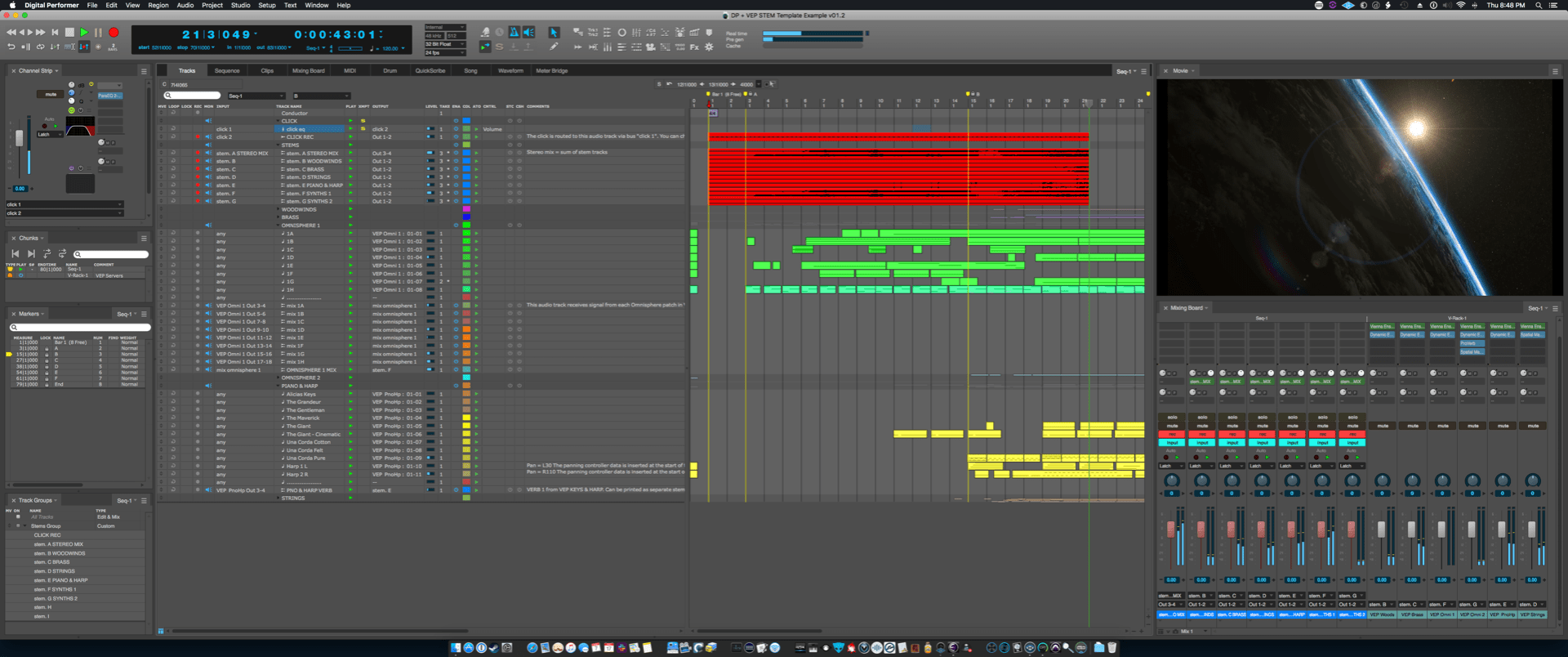
The core curriculum, topics, and weekly projects are the same for both undergraduate and graduate students; however, graduate students are held to a higher standard of depth, rigor, and professional execution. Graduate-level work is expected to demonstrate superior realism in MIDI realizations, advanced production techniques, and sophisticated application of orchestration concepts in regard to music for media.
Graduate students must also provide detailed documentation of their workflow and production decisions, reflecting current industry standards, and are evaluated with greater emphasis on originality, problem-solving, and professional presentation. Weekly projects are reviewed in studio discussions, where graduate students are expected to offer deeper analytical insights and lead portions of the critique process. Undergraduate students are assessed primarily on technical proficiency, accuracy, and application of foundational skills.
ENROLLMENT REQUIREMENTS (PREREQUISITES, CO-REQUISITES, PROGRAM RESTRICTIONS, ETC.)
Open to undergraduate and graduate students with instructor approval. Students must have basic proficiency with a Digital Audio Workstation (DAW), and prior experience with MIDI sequencing, audio mixing, notation software, and orchestration concepts is recommended. Non-degree majors must demonstrate proficiency through a portfolio or other project examples. Graduate and undergraduate students are enrolled together but evaluated according to level-appropriate standards.
TEACHING AND LEARNING METHODS
Instruction combines lectures, demonstrations, and guided studio work to develop both technical and professional skills. Weekly projects reinforce concepts in MIDI realization, orchestration, and production, with in-studio playback sessions used for critique and peer feedback. Students engage in collaborative discussions, hands-on DAW practice, and problem-solving exercises modeled after industry workflows. Graduate students are expected to contribute advanced analysis during discussions and lead portions of critique sessions.
LEARNING OUTCOMES AND OBJECTIVES
By the end of this course, students will be able to create professional-quality MIDI realizations across multiple genres using sample libraries, plug-ins, and DAW techniques. They will apply modern orchestration principles to produce realistic and expressive audio demos, utilizing signal processing and mixing techniques to enhance clarity, balance, and impact.
Students will implement industry-standard workflows, tools, and file delivery practices while engaging in collaborative discussions, hands-on DAW practice, and problem-solving exercises modeled after professional studio environments. Weekly projects and in-studio playback sessions will reinforce technical and creative concepts, with an emphasis on effective communication, collaboration, and professional conduct.
Graduate students will be expected to contribute advanced analysis, lead portions of critique sessions, and present work that demonstrates superior realism, technical execution, and workflow documentation.
TECHNICAL RECOMMENDATIONS
- Digital Audio Workstation (DAW): Logic Pro, Cubase, Pro Tools, or similar.
- MIDI Keyboard & Virtual Instruments: High-quality sample libraries recommended; required for graduate students.
- Notation Software: Sibelius, Dorico, or Finale for creating professional scores and parts.
- Recording Capability: Ability to record and capture live performances for integration into assignments and projects.
For scoring MAJORS: suggested minimum personal computer and software resources.
Contact Professor Thomas with questions about Synthestration, tech gear/sample libraries.
SYNTHESTRATION 2: ADVANCED SCORING AND PRODUCTION TECHNIQUES
(MUS-K 455/555) Spring semesters: 3 Credits. 11:10-12:25pm T TH, ESB328
This course builds on skills from Synthestration 1, focusing on advanced MIDI mockups, nuanced orchestration, and expressive realism. Students integrate music editing workflows and Pro Tools for professional delivery, refining production, mixing, and industry-standard practices to create polished, broadcast-ready audio across media, film, and other genres.

Students will work on longer-form mockups and multi-cue projects, developing strategies for maintaining sonic consistency, thematic continuity, and professional project organization across extended works. Music editing workflows in Pro Tools are integrated throughout, covering cue assembly, tempo mapping, click track creation, stem printing, and delivery formats for post-production. Advanced production and mixing skills are emphasized, including precision EQ, compression, automation, and spatial processing to meet broadcast-ready loudness standards.
Team-based collaboration simulates real-world scoring environments, with students engaging in shared session workflows, cloud-based project management, and role-specific contributions. Professional workflow practices, such as advanced file management, version control, and documentation of creative and technical decisions, are reinforced through hands-on assignments. In-studio playback sessions and guided critiques develop critical listening skills, with graduate students expected to lead feedback discussions and demonstrate a higher level of technical and artistic insight.
ENROLLMENT REQUIREMENTS (PREREQUISITES, CO-REQUISITES, PROGRAM RESTRICTIONS, ETC.)
Successful completion of Synthestration 1: Modern Scoring and Production Techniques is required; this requirement may be waived if the student demonstrates advanced skills in synthestration through a portfolio review or placement assessment. Open to undergraduate and graduate students with instructor approval.
Students must have proficiency with a Digital Audio Workstation (DAW), and prior experience with MIDI sequencing, mixing, notation software, and orchestration concepts. Basic Pro Tools skills are highly recommended to support professional music editing workflows. Graduate and undergraduate students are enrolled together but evaluated according to level-appropriate standards.
TEACHING AND LEARNING METHODS
Instruction combines lectures, demonstrations, and guided studio work to develop both technical and professional skills. Weekly projects reinforce concepts in MIDI realization, orchestration, and production, with in-studio playback sessions used for critique and peer feedback. Students engage in collaborative discussions, hands-on DAW practice, and problem-solving exercises modeled after industry workflows. Graduate students are expected to contribute advanced analysis during discussions and lead portions of critique sessions.
LEARNING OUTCOMES AND OBJECTIVES
By the end of this course, students will be able to create professional-quality MIDI realizations across multiple genres using sample libraries, plug-ins, and DAW techniques. They will apply modern orchestration principles to produce realistic and expressive audio demos, utilizing signal processing and mixing techniques to enhance clarity, balance, and impact.
Students will implement industry-standard workflows, tools, and file delivery practices while engaging in collaborative discussions, hands-on DAW practice, and problem-solving exercises modeled after professional studio environments. Weekly projects and in-studio playback sessions will reinforce technical and creative concepts, with an emphasis on effective communication, collaboration, and professional conduct.
Graduate students will be expected to contribute advanced analysis, lead portions of critique sessions, and present work that demonstrates superior realism, technical execution, and workflow documentation.
TECHNICAL RECOMMENDATIONS
- Digital Audio Workstation (DAW): Logic Pro, Cubase, Pro Tools, or similar.
- MIDI Keyboard & Virtual Instruments: High-quality sample libraries recommended; required for graduate students.
- Notation Software: Sibelius, Dorico, or Finale for creating professional scores and parts.
- Recording Capability: Ability to record and capture live performances for integration into assignments and projects.
For scoring MAJORS: suggested minimum personal computer and software resources.
Contact Professor Thomas with questions about Synthestration, tech gear/sample libraries.
GAME MUSIC COMPOSITION
(MUS-K 455/555) Fall semesters: 3 Credits. 11:15-12:30pm M TH, ESB328
This course explores the art and craft of composing music for video games, focusing on interactive and adaptive music systems. Students will learn the technical, creative, and collaborative skills required to design compelling music for various gaming genres.
Emphasis will be placed on storytelling, emotional engagement, and integration with gameplay mechanics. Through hands-on work with digital audio workstations (DAWs), middleware such as FMOD or Wwise, and game engines like Unity or Unreal, students will compose and implement original music for interactive scenarios.
Currently only offered in fall semesters. This highly sought after course is taught by game, TV, and film composer Roger Neill. Permission to take course is required by instructor, or by scoring program director.The course goes over all the dramatic aspects of writing an immersive video game score.
Some topics include:
- How scoring games differs from Film/TV
- Implementation/Adaptive Music Techniques…the how music is composed and used in games
- Compositional techniques specific to video game scoring
- Hybrid orchestration…mixing samples, live instruments, and synth using stems
- Contracts, royalties and the basics of making a living as a working game composer
Participation requires strong DAW skills and sample library implementation. First priority is given to M.M. students in the Scoring for Visual Media degree, and those students must first complete both Short Form, Long Form, and Synthestration 1 and 2 as prerequisites.
THE DUB: MIXING FOR THE SCREEN
(MUS-K 455/555) Spring semesters: 1.5 Credits. 11:10-12:25pm MF, ESB328

Over 8 intensive weeks (Jan 12–Mar 6), you’ll work hands-on with 11 original short films from the 2025/2026 Double Exposure series, collaborating with your classmates to organize, edit, premix, and final mix a cinema-quality soundtrack.
Hone your technical precision, creative instincts, and teamwork skills — and hear your final mixes premiere on the big screen at the IU Cinema on April 4.
LEARNING OUTCOMES & OBJECTIVES
- Gain a comprehensive understanding of the end-to-end post-production audio process
- Hone skills in editing dialogue, designing sound effects, and integrating music into visual media
- Apply industry-standard techniques for organizing, premixing, and final mixing of audio elements
- Strengthen collaborative and communication skills essential for team-based post-production
- Build adaptability by tackling audio challenges across various film genres and styles
ENROLLMENT REQUIREMENTS (PREREQUISITES, CO-REQUISITES, PROGRAM RESTRICTIONS, ETC.)
Open to undergraduate and graduate students with instructor approval. Students must have basic proficiency with a Digital Audio Workstation (DAW), and audio mixing and editing know-how is recommended. Non-degree majors must demonstrate proficiency through a portfolio or other project examples. Graduate and undergraduate students are enrolled together but evaluated according to level-appropriate standards.
TEACHING AND LEARNING METHODS
Instruction combines lectures, demonstrations, and guided studio work to develop both technical and professional skills. Weekly projects reinforce concepts in editing, sound design, and production mixing, with in-studio playback sessions used for critique and peer feedback. Students engage in collaborative discussions, hands-on DAW practice, and problem-solving exercises modeled after industry workflows. Graduate students are expected to contribute advanced analysis during discussions and lead portions of critique sessions.
TECHNICAL RECOMMENDATIONS
- DAW proficiency. (Pro Tools recommended, but not required)
- Recording Capability: Ability to record and capture live performances for integration into assignments and projects.
By permission of instructor. Contact Professor Thomas with any questions.
ORCHESTRATION FOR THE SCREEN
(MUS-K 455/555) Spring semesters: 1.5 Credits. 1:00-2:15pm MF, ESB328

This modular spring semester course (March 9 – May 8) is designed for music majors that want to improve and understand the techniques of orchestration for picture. In-depth study and practice of creating current industry-standard practices in Hybrid Orchestration for media, film, TV, and game music. Transforming MIDI-based scores into Sibelius/Finale scores, as well as techniques for special doubling and overdub pass recording are explored, as well as how to interface with the composer’s team and preparedness for final timely delivery of materials for recording. Taught by Hollywood professional orchestrator Brad Ritchie (Supergirl, The Flash, Black Klansman, La-La Land, First Man — IMDB listing).
TECHNICAL RECOMMENDATIONS
- Digital Audio Workstation (DAW): Logic Pro, Cubase, Pro Tools, or similar.
- MIDI Keyboard & Virtual Instruments: High-quality sample libraries recommended; required for graduate students.
- Notation Software: Sibelius, Dorico, or Finale for creating professional scores and parts.
- Recording Capability: Ability to record and capture live performances for integration into assignments and projects.
By permission of instructor. Contact Professor Groupé with any questions.
INDEPENDENT STUDY IN MUSIC SCORING FOR VISUAL MEDIA
(MUS-K 455/555) Fall and spring semesters. 1-3 credits, depending on the scope of the project.
This is a project-based course rather than a private lesson. Students are expected to propose a project to the instructor along with a general plan of approach. The course may be taken for 1, 2, or 3 credits, depending on the scope of the project. For example, the “Double Exposure” collaboration with the IU Media School is offered as a 1-credit option for the participating composer.
By permission of instructor. Contact Professor Groupé with any questions.
K560 – EPISODIC TELEVISION WRITING (on site in Los Angeles)

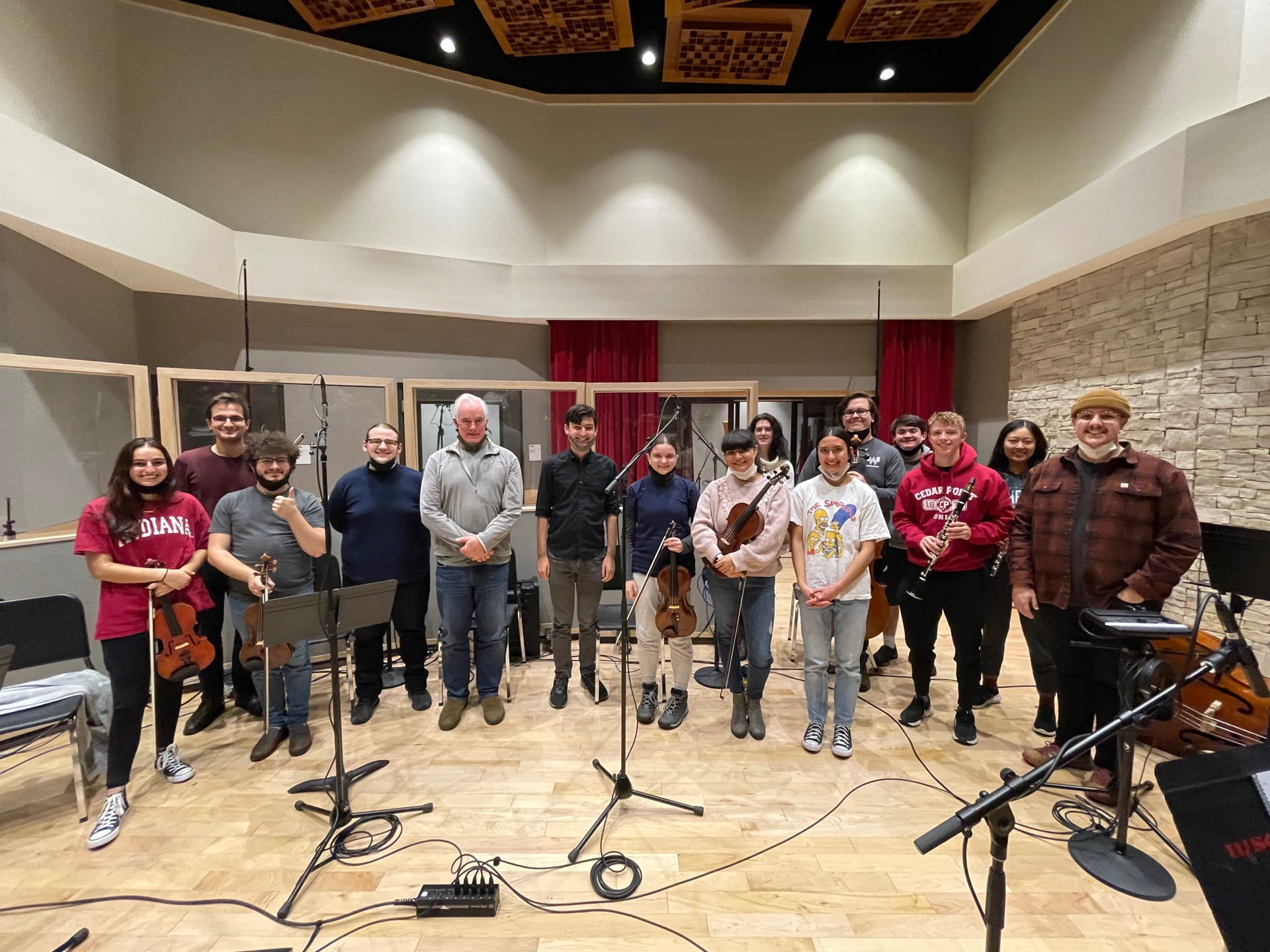
This 8 weeks course, first 8 weeks of the spring semester, will be taught in Los Angeles by top television composer Rick Marvin.
This immersive professional experience is similar to a work study program. Students will need to cover their travel and lodging expenses while there.
There is a limited number of seats to be in this course, it is competitive, and there is an application process.
Along with weekly in-studio mentoring of episodic TV writing assignments, students will also be engaging in weekly field trips to a variety of industry related events. Such as, visiting a large scoring session at Sony, Fox, Warner Bros or other stages. Visits to other working composers and their studios, guest visits from music professionals in a variety of fields, tours of Ascap and BMI, film festival screenings, and more.
Currently the course is only available to M.M. students in the Scoring for Visual Media Degree program, and those students must first complete both Short Form, Long Form, Synthestration 1 and 2 as prerequisites.
Permission to be authorized, after completing the above, will be given by the scoring program director.
