For film fans, January is a busy month. In addition to ceremonies like the SAG Awards, the Critics’ Choices Awards, and the Golden Globes, there is also the announcing of the Academy Award nominations. Because of all this, instead of doing the usual Monthly Movie Round-Up, we at A Place for Film thought that we should instead do a Yearly Movie Round-Up. The principle essentially stays the same; however, rather than the regular bloggers selecting their favorite discovery-of-the-month, they will discuss which film they pick as the absolute best film they saw in 2017. These picks aren’t restricted to 2017 releases, either. Any movie is up for grabs, so long as it was watched for the first time in the past year. Please feel free to share your own choices via any of our social media accounts: Facebook, Twitter, Instagram, and Pinterest. (more…)

Shadows of Forgotten Ancestors: Multidimensionality of Memory and Eternity

Guest post by Nataliya Shpylova-Saeed and Svitlana Melnyk.
In 2018 the Dovzhenko Film Studios (Kyiv, Ukraine) celebrates its 90th anniversary. Organized during the Soviet period and named after the Ukrainian film producer Oleksandr Dovzhenko in 1957, it contributed to the versatile development of Soviet cinematography. A production place for such masterpieces as Earth (1930) and White Bird with Black Mark (1970), the Dovzhenko Film Studios also produced Shadows of Forgotten Ancestors, a masterpiece of Ukrainian cinematography, well-known far beyond the geographical boundaries of Ukraine. Premiered in 1965, this film was innovative and subversive: in addition to a vast array of artistic experimentations, marking the outlines of Ukrainian poetic cinematography, it contributed to the development of anti-Soviet movements. (more…)
Attack the Block: “What If?” and the Importance of POV
Hey, check it all out
Baby, I know what it’s all about
Before the night is through
You will see my point of view
Even if I have to scream and shout
– Prince, “Baby I’m a Star”
In the very first piece I ever wrote for the IU Cinema blog, I wrote about the speculative elements of the imagined dystopian future that John Carpenter’s Escape from New York took place in. I highlighted a simple concept that is the fuel that drives the sci-fi engine: the concept of “what if?” It’s the question artists, thinkers, and creatives have been asking themselves for decades and centuries to come up with some of the most innovative and far-reaching stories that have helped shaped the world we live in today. The concept itself has the implication that you are taking something or some event from present day and are extrapolating on the concept with some sort of wrinkle to have it ring out with social resonance. (more…)
Now in 2K!: Restoring and Erasing STALKER’s Visual Obscurity

Guest post by Caleb Allison.
In Andrei Tarkovsky’s poetic monograph Sculpting in Time: Reflections on the Cinema, he comments on the perpetual need for viewers to understand what the Zone in Stalker (1979) symbolizes. I believe part of the film’s power lies in its symbolic and visual ambiguity. There are no definitive answers given – part of me wishes there were – but a wiser part knows it’s more important not to have them. Tarkovsky pleads, “People have often asked me what the Zone is, and what it symbolizes, and have put forward wild conjectures on the subject. I’m reduced to a state of fury and despair by such questions. The Zone doesn’t symbolise anything, any more than anything else does in my films: the zone is a zone, it’s life…” Well, out of respect for Tarkovsky’s fury and despair this article will not plumb the continually plumbable symbolic depths of Stalker. For that waterlogged journey please catch up with Geoff Dyer’s entertainingly divergent book about the film, Zona: A Book about a Film about a Journey to a Room. (more…)
As One

Guest post by John Finch, PhD, Associate Director of the Institute for Korean Studies and Lecturer of East Asian Languages and Cultures.
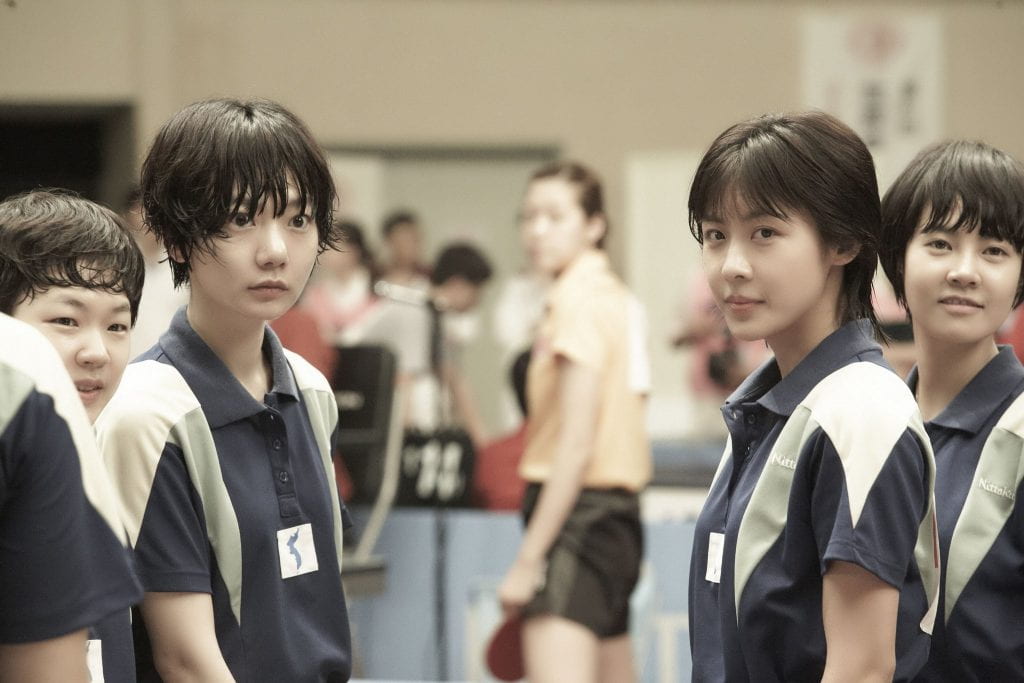
It would be difficult to pick a more timely movie to include in a series about the Cultural Foundations for Peace than As One (2012). In the past year, uncertainty about peace in the Korean peninsula has re-emerged as a major concern for the world as the leaders of both the United States and North Korea have threatened each other with nuclear annihilation. This month’s agreement that North Korea will be sending a delegation to the upcoming Pyeongchang Winter Olympics was a welcome change in the tone of news from Korea. As One is based on an example of sports diplomacy between North and South Korea from nearly thirty years ago, and it offers an opportunity to reflect on what has kept the Korean peninsula free from open warfare for more than a generation. (more…)
Cultural Foundations for Peace

Guest post by Timothy L. Fort, PhD, JD, Eveleigh Professor of Business Ethics, and Professor of Business Law & Ethics at the Kelley School of Business at Indiana University.
While it is true that governments negotiate peace treaties and maintain balances of power that relate to issues of war and peace, peacebuilding may also result from the cultural foundations that provide the opportunity to draw people together. Indeed, some peace scholars have argued that long-standing peace comes not from dramatic political moments, but from incremental changes of everyday practices that lead to more peaceable interchanges among people of different nationalities, races, ethnic groups, genders, religions, and other characterizations that otherwise might divide people from one another. (more…)